

Our offer
Claim your free ISO 26262 Tool Readiness Check
Whether you're an OEM or a supplier, aligning with ISO 26262 is essential for building safe, reliable, and trusted automotive systems.
The Tool Readiness Check is your first step toward meeting ISO 26262 tool qualification requirements. Designed for teams developing safety-critical automotive systems, this free initial assessment helps you understand where your development tools stand in relation to the standard—and what actions are needed to achieve compliance.
How it works
From confusion to clarity: ISO 26262 compliance made visual
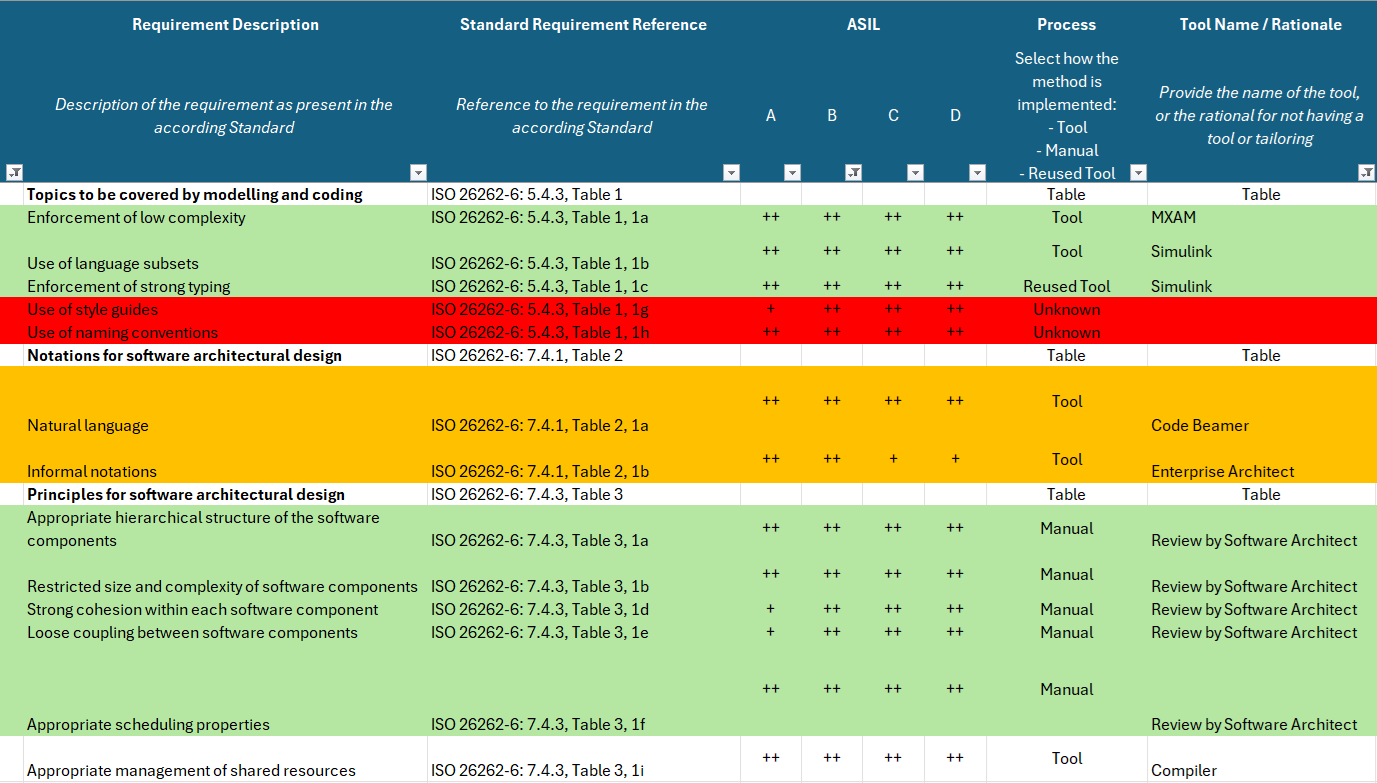
Before You Start: Key Things to Understand
To fill out the Tool Readiness Check spreadsheet effectively, you should have a basic understanding of your project’s toolchain and development processes.
Understanding Your Project Context
Make sure you are familiar with:
Project Processes: The workflows and development stages in which tools are applied.
ASIL Level: The Automotive Safety Integrity Level assigned to the project, which determines the applicable ISO 26262 requirements.
Key Information About Your Tools
For each tool in your project, it is important to know:
Usage Context: In which part of the software process is the tool applied, and what is its specific purpose?
Classification or Qualification Status: Does the tool have an existing classification or qualification? Is it being used according to those guidelines?
What You Do Not Need to Know
The TRC is specifically designed to provide all the important ISO requirements for the software development process. Additionally, these requirements can be filtered according to the ASIL of your toolchain, tailoring them to your specific needs.
The Output: A Clear Map and Actionable Next Steps
The true value of the Tool Readiness Check lies in its output: a clear, actionable plan for the safety manager.
After the consultation, you will receive a clear map detailing the status of your tools within the development process. This map, derived from the custom assessment, provides:
A Clear Status Overview: You will know exactly which tools are "good to go" and which are raising red flags.
Actionable Insights: This is not just a report of problems; it is a list of next steps for achieving ISO 26262 compliance and functional safety. If your tools are currently missing the mandatory required confidence, the output clarifies what steps you need to take.
A Solid Foundation: The results confirm whether your tools are ready for safe development, or if you need to take steps to gain the required confidence. The TRC ensures you stop guessing and start acting strategically.
Performing this simple, early-stage check helps mitigate the risk of a catastrophic, late-stage audit finding, an issue that could delay product launch timelines, trigger costly rework, and result in significant regulatory or compliance penalties. By addressing potential gaps early, teams can ensure smoother development, reduce financial exposure, and maintain project schedules.
By dedicating a short amount of time to this expert-guided process, you secure a foundational level of confidence that is essential for all subsequent safety activities. Furthermore, Validas can accommodate other safety standards, such as IEC 61508, DO-178C/DO-330, and EN 50657, upon request, making this an integrated first step for multi-standard compliance.
From Confusion to Clarity
For companies whose reputation and success depend on functional safety, the complexity of ISO 26262 is a daily reality. The Tool Readiness Check offers the most logical, low-risk answer to the question, "Where do I start?"
It is the necessary diagnostic that transforms an overwhelming amount of documentation into a manageable set of actionable tasks, ensuring that your foundation, your development toolchain, is as safe as the product you are building. Invest 30 minutes getting a clear, expert-backed map of your path to compliance.
Let's schedule a meeting.
Book your free Tool Readiness Check now and take the first step toward confident, compliant development.